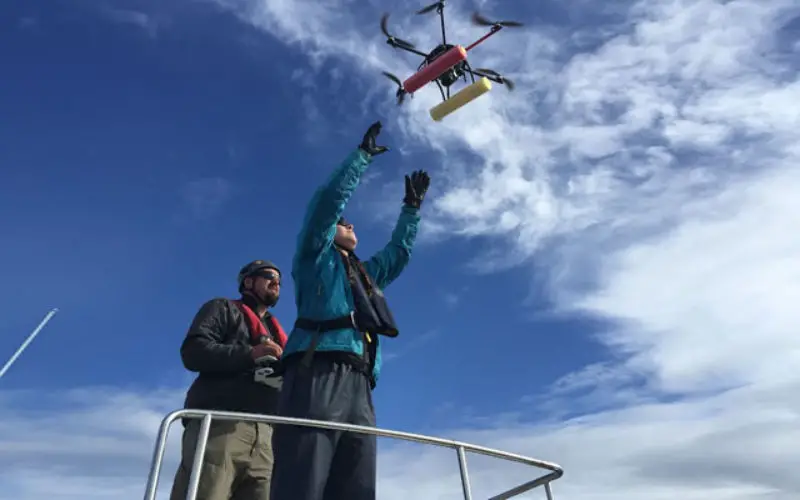
Unmanned aerial vehicle allows scientists to study killer whale health and reproduction while also offering a glimpse into the family life of these social animals
John Durban is a marine mammal biologist with NOAA Fisheries and he recently got back from the research expedition to study whales health and reproduction while also offering a glimpse into the family life of these social animals.
John Durban has used hexacopter Unmanned Aerial Vehicle (UAV) that yielded incredible pictures. Durban explains that these photos, in addition to being beautiful, are also full of data that help scientists monitor the health and reproductive success of this very endangered group of whales.
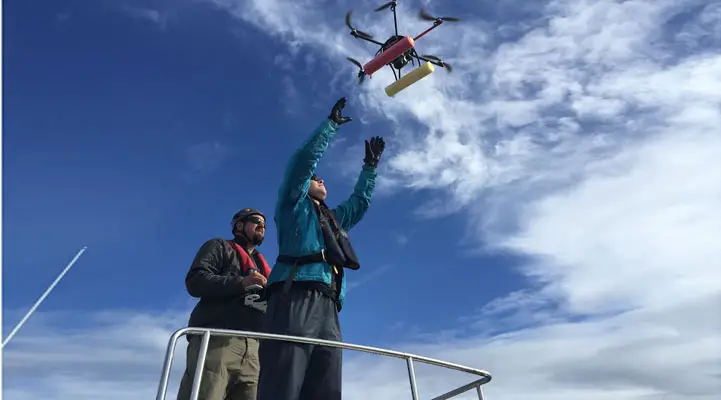
Dr. John Durban piloting the hexacopter into the hands of co-pilot Dr. Holly Fearnbach; both biologists with NOAA’s Southwest Fisheries Science Center. Credit: NOAA
UAV with an onboard camera above the whales and measure their length, so that researcher can monitor growth and to look at their width profile. Researcher does that by taking pictures and taking measurements from the pictures.
The researchers kept the UAV at least 90 feet above the whales at all times to avoid disturbing them. The onboard pressure altimeter, so with every photograph get a measure of altitude, so can scale for measurements and pixels on the photograph to measurements in centimeters on the scale of the whale. From 100 feet up typically accurate to just a few centimeters, so we can get very precise measurements.
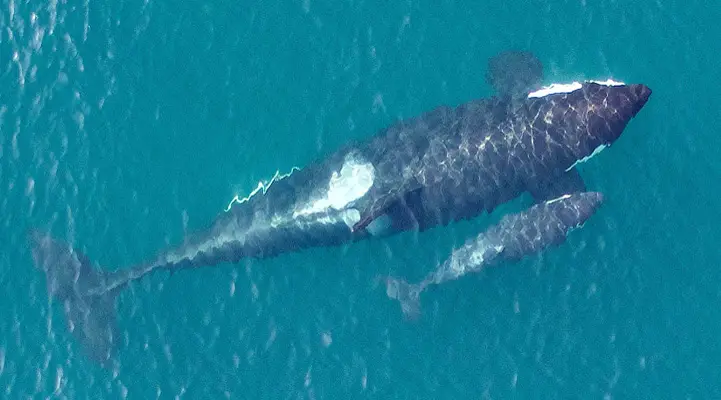
Overhead image of the newest member of the Southern Resident killer whale population, L122, just days after being born to first-time mother L91. This image shows the small size of neonate calves and the close bond between mother and calf that will last a lifetime. Credit: NOAA, Vancouver Aquarium. Taken under NOAA Fisheries research permit and FAA flight authorization.
In addition, they were operating under research permits from NOAA Fisheries and flight authorization from the Federal Aviation Administration when in U.S. waters, and from Fisheries and Oceans Canada with flight authorization from Transport Canada when in Canadian waters.
Before using a UAV to view marine wildlife, please visit our guidelines page for information on how to do so responsibly.