Iran Satellite Launch 2025 to Boost Space Capabilities with Three New Satellites
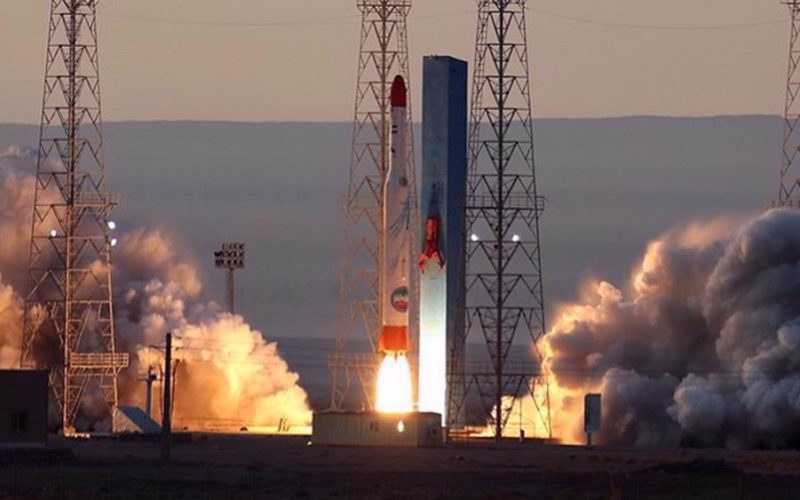
Iran is preparing to launch three homegrown remote-sensing satellites by the end of the current Iranian calendar year, marking a significant milestone in the Iran Satellite Launch 2025 initiative. The head of the Iranian Space Agency (ISA), Hassan Salariyeh, made the announcement during the inauguration of World Space Week in Tehran. He revealed that the upcoming satellites—Kowsar, Tolo-3 (Sunrise-3), and Zafar-2 (Victory-2)—will be launched into orbit soon to form a satellite constellation, enhancing Iran’s Earth observation capabilities.
The launch is part of Iran’s efforts to advance its space program and utilize space-based technology for various civilian and scientific purposes.
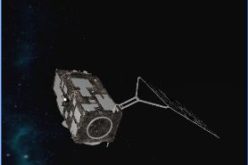
Salariyeh emphasized that the recent success of the Chamran-1 satellite, launched earlier this year, has set the stage for the next phase of the Iran Satellite Launch 2025 program. Chamran-1, launched in September 2024 aboard the domestically developed Qaem-100 space launch vehicle, has been placed into orbit at an altitude of 550 kilometers above the Earth’s surface.
Weighing around 60 kilograms, the satellite’s primary mission is to test hardware and software systems for validating orbital maneuver technology. This marks a major stride in Iran’s space program, which continues to progress despite Western-imposed sanctions.
Additionally, the ISA is focused on the launch of the Saman orbital transfer block, which is expected to play a key role in future satellite missions. Salariyeh also discussed the test launch of an Internet of Things (IoT) satellite system next year, developed in cooperation with the private sector. The IoT satellite system is designed to enhance disaster management capabilities by enabling data reception and transmission, particularly in regions where terrestrial infrastructure may be compromised during natural disasters.
Iran’s entry into the global space race began in 2009 with the launch of its first domestically produced satellite, Omid (Hope), into orbit. Since then, the country has launched several remote-sensing satellites, built by local universities, with resolutions ranging from tens to hundreds of meters.
Over the past two decades, Iran has significantly improved its space technology capabilities, now being able to manufacture satellites with advanced communications and remote sensing technologies that offer greater precision.
The Iran Satellite Launch 2025 initiative reflects Iran’s continued focus on expanding its civilian space program, despite facing sanctions from Western nations. Today, the country ranks among the top 10 nations globally with the capability to develop and launch satellites. The upcoming launches of Kowsar, Tolo-3, and Zafar-2 will reinforce Iran’s position as a key player in the space domain.
With the launch of these three new satellites as part of the Iran Satellite Launch 2025 program, Iran is poised to enhance its Earth observation capabilities and strengthen its role in the global space community.
Source: PressTV